

What government communicators can learn from journalists

If you want to understand why public communication so often misses its mark, it helps to look at how journalists do the same job differently.
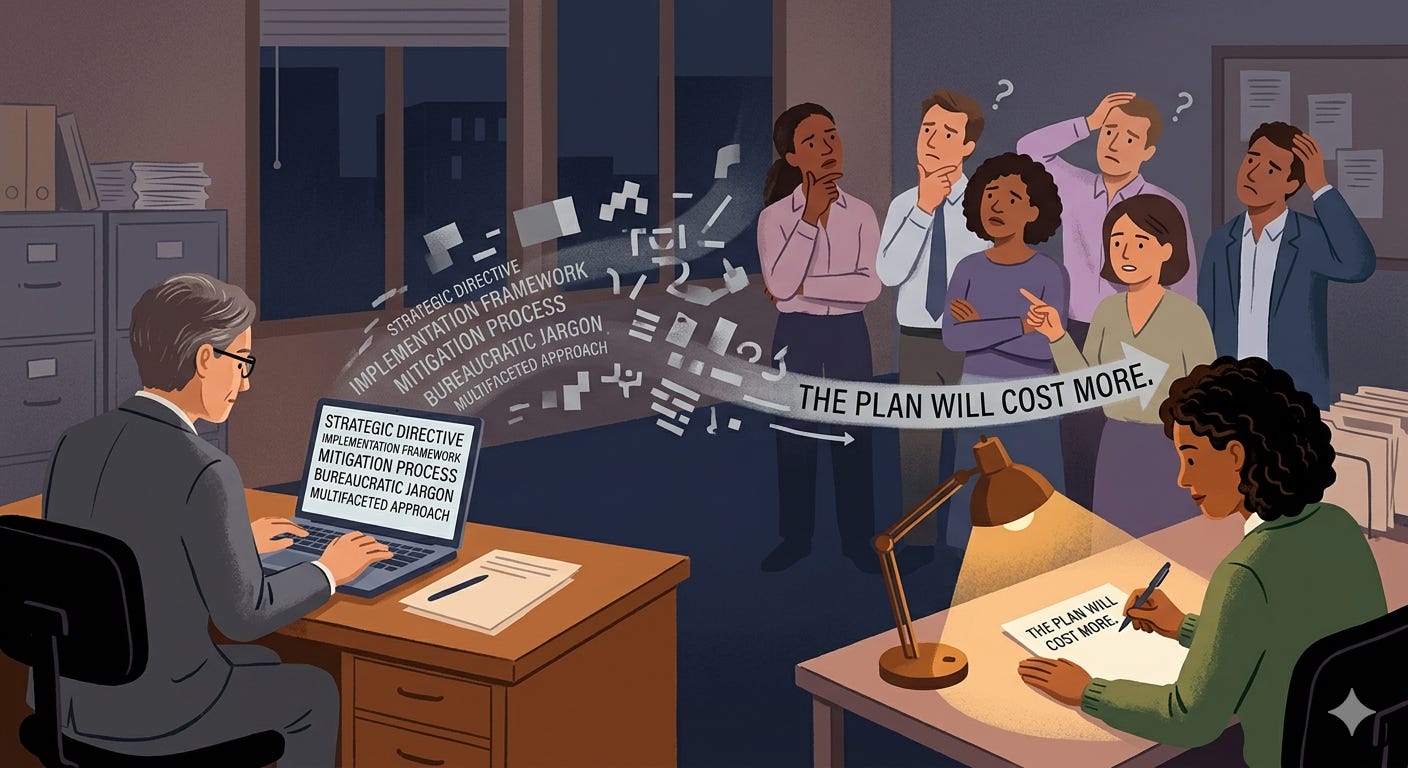
There is a joke that circulates quietly among communications professionals: government communicators exist to make information disappear. It is unfair, of course. But it persists because, too often, it contains a grain of truth.
This is not a screed against public sector communications. It is something more useful: an honest look at what journalists do that government communicators frequently do not, and why closing that gap would make public institutions far more trusted.
Start with the story, not the statement
Journalists are trained, from their earliest days, to find the story. Not the announcement. Not the policy. The story: the human consequence, the tension, the thing that makes a reasonable person stop scrolling and pay attention.
Government communications too often begins in the opposite place. A policy is decided. A press release is drafted. Quotes are inserted. The release is issued. This process produces content that is technically accurate and humanly inert.
Journalists work differently. They ask: who is affected? By how much? Why does this matter now? What would happen if nothing changed? These are not just editorial questions. They are the questions the public is already asking. When communicators skip them, they create a gap between what institutions publish and what people actually want to know.
The lesson here is not to sensationalise. It is to respect the public’s intelligence enough to lead with relevance.
Master the discipline of clarity under pressure
Journalism, broadcast and online, operates under relentless deadline pressure, and that pressure produces a useful discipline: the obligation to be clear. You cannot file 500 words of hedged ambiguity when a news editor is waiting. You must decide what the story is, say it plainly, and defend that choice.
Government communications, by contrast, often operates under a different kind of pressure: the pressure to offend no one. This produces language that is technically defensible but practically useless. Words like “a range of stakeholders,” “ongoing dialogue,” and “evidence-based approach” communicate nothing, not because the people writing them are incompetent, but because the approval processes that produce them reward caution over clarity.
Journalists who survive in competitive newsrooms learn to make editorial judgments quickly and stand by them. Government communicators would benefit from cultivating the same habit. Clarity is not recklessness. It is respect.
Understand what “off the record” actually teaches you
One of the most under-appreciated skills in journalism is the art of the background conversation: the off-the-record chat, the quiet briefing, the candid exchange that never appears in print but shapes a journalist’s understanding of a story. These conversations are how journalists develop genuine institutional knowledge. They understand not just what an organisation says publicly, but why it is saying it, what pressures it is navigating, and where the real tensions lie.
Government communicators frequently confuse media relations with media management. The former builds genuine understanding; the latter builds suspicion. A journalist who feels managed will eventually, and professionally, find a way to say so.
The more productive posture is to brief honestly, including about complexity and difficulty. When communicators treat journalists as adversaries to be neutralised rather than professionals to be engaged, they lose the opportunity to shape understanding. And when stories break without their input, they lose it entirely.
Tell the truth about what you do not know
This is where government communications most consistently falls short, and where journalism, at its best, most consistently excels.
Good journalists acknowledge what they cannot verify. They note when data is incomplete, when experts disagree, when the picture is still developing. This acknowledgement, counterintuitively, increases credibility. It signals that the journalist is not selling something. They are reporting.
Government communications has an uneasy relationship with uncertainty. Admitting that something is not yet decided, that projections are estimates, or that a policy might have unintended consequences is perceived, often rightly, as politically risky. So communicators hedge, over-claim, or simply avoid the subject.
The public, however, has become remarkably sophisticated about this pattern. They recognise the hedge. They notice the omission. And they draw their own conclusions, usually less charitable than the truth would warrant.
A government communicator who learns to say “we do not have the full picture yet, and here is what we do know” will be trusted more than one who projects false certainty. Not because people reward uncertainty, but because they reward honesty.
The underlying principle
All of this points to a single, uncomfortable truth: the best government communications and the best journalism share the same foundation, an orientation towards the audience rather than the institution.
Journalists do not, or should not, write for their sources. They write for their readers.
Government communicators, by contrast, are often functionally writing for their governors, ministers, senior civil servants, or the approval process itself. The public becomes an afterthought.
Reversing this orientation is not easy. It requires institutional courage as much as professional skill. But it is the only path to communications that genuinely serves the public interest, which, in the end, is the only justification for government communications existing at all.